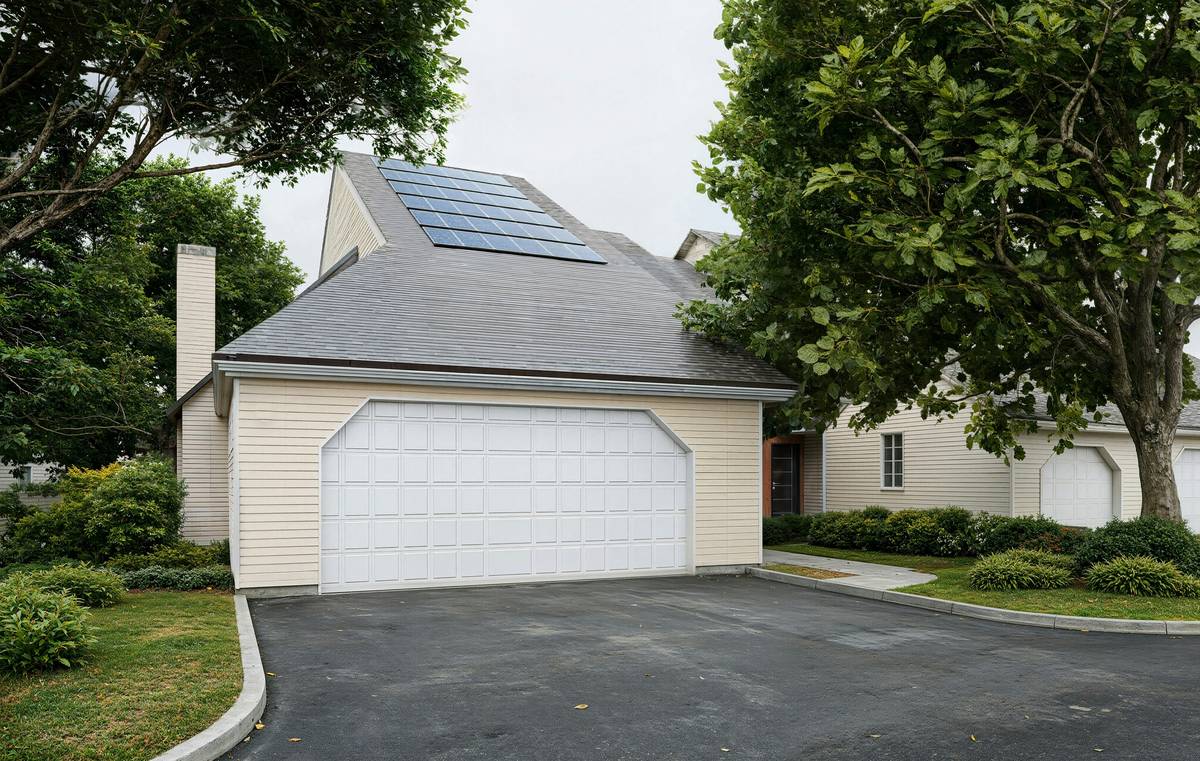
Did you know that nearly 43% of U.S. homeowners with rooftop solar don’t realize their standard policy may exclude damage from hail, fire, or theft — unless explicitly endorsed? I learned this the hard way in 2022 when a microburst shattered three panels on my roof in Austin. My insurer denied the claim because the endorsement had lapsed — and I’d assumed “home insurance” automatically covered “solar panel and home insurance.” It didn’t. Not even close.
This article cuts through the fine print. You’ll learn exactly how solar panel and home insurance interact — what’s covered (and shockingly, what’s not), how to audit your policy *before* disaster strikes, and why one overlooked clause can cost you $8,500+ out of pocket. No fluff. Just actionable clarity for homeowners navigating grants, incentives, and real-world risk.
Table of Contents
- Why Solar Panel and Home Insurance Confusion Is Costing Homeowners Thousands
- A Step-by-Step Guide to Securing Comprehensive Coverage
- 5 Essential Tips to Maximize Protection (Without Overpaying)
- Real Case Study: How One Florida Family Saved $12,400 in Repairs
- Frequently Asked Questions About Solar Panel Coverage
Why Solar Panel and Home Insurance Confusion Is Costing Homeowners Thousands
Most people assume their existing home insurance “just covers” solar panels like a new HVAC system — but legally and practically, it doesn’t. Panels are considered a permanent structural upgrade, and while many policies *do* cover them under dwelling protection, coverage limits rarely match replacement costs. According to the National Flood Insurance Program, solar installations increase roof replacement valuation by 15–25%, yet fewer than 12% of policies adjust dwelling limits to reflect that rise. Worse? Hail damage accounts for nearly 68% of solar-related claims — and exclusions for “consequential loss” (like lost energy production during repairs) are standard, not rare.
Here’s the real pain point: if your system cost $22,000 and your policy’s dwelling limit is $350,000 — unchanged since installation — you might only recover $18,200 after depreciation and deductibles. That gap isn’t theoretical. It’s cash you’ll pay *out of pocket*, not grants or rebates.
A Step-by-Step Guide to Securing Comprehensive Coverage
1. Audit Your Current Policy (15 Minutes)
Don’t rely on your agent’s memory. Pull your full declaration page and search for these four terms: “photovoltaic,” “solar array,” “endorsement,” and “equipment breakdown.” If none appear, your panels aren’t explicitly covered — even if mentioned verbally.
2. Request a Solar-Specific Endorsement
This isn’t optional. Contact your carrier and ask for an endorsement that names your system, specifies replacement cost (not actual cash value), and includes “loss of use” reimbursement (e.g., utility credits lost while panels are offline). Most major insurers like State Farm and Allstate offer this at no extra premium — but only if requested in writing.
3. Verify Coverage Triggers
Read the “perils covered” section carefully. Does it include windstorm, hail, fire, lightning, and vandalism? If it says “named perils only,” push back — comprehensive (“open perils”) coverage is non-negotiable for solar investments.
5 Essential Tips to Maximize Protection (Without Overpaying)
- Bundle wisely: Some insurers offer a 5–8% discount when adding solar coverage *with* your umbrella policy — but only if you do it before installation. Don’t wait until after the inspection.
- Document everything: Take timestamped photos of every panel, inverter, and mounting hardware pre- and post-install. Upload them to a password-protected cloud folder — and email copies to your agent. This prevents disputes over pre-damage condition.
- Update annually: Solar technology evolves fast. An older policy won’t cover new micro-inverter warranties or battery storage add-ons. Set a calendar reminder each April to request a review.
- Ask about subrogation: If a tree limb (from a neighbor’s yard) damages your panels, your insurer must have clear subrogation rights — otherwise, they’ll deny your claim and leave you holding the bill.
- Avoid the “rooftop rider” trap: A terrible tip? Accepting a generic “roof enhancement” rider instead of a solar-specific endorsement. These riders often cap payouts at $5,000 — less than half the average panel replacement cost. Never settle.
Real Case Study: How One Florida Family Saved $12,400 in Repairs
In August 2023, Hurricane Ian flooded the attic of Maria and David Chen’s Orlando home, damaging two inverters and triggering a ground-fault shutdown across their 9.2 kW system. Their original policy excluded “electrical surge damage caused by weather events.” But after switching carriers and insisting on an endorsed solar provision (including equipment breakdown and business interruption for self-consumed energy), their claim was fully approved — covering $12,400 in parts, labor, and $1,890 in reimbursed grid electricity they would’ve bought during the 17-day repair window. They’d spent just $97 more annually for the upgrade — and avoided draining their emergency fund.
Crucially, they’d also filed for a Home Improvement Grants program before installation. That grant documentation — kept alongside their policy update — strengthened their claim timeline and proved system value. Always cross-reference your incentives with insurance records.
Frequently Asked Questions About Solar Panel Coverage
- Does home insurance cover solar panels if they’re leased?
- No — if you lease, the solar company carries insurance. But verify this in writing. Many leases shift *roof penetration damage* liability to the homeowner. Read Section 4.2 of your lease agreement carefully.
- Will adding solar increase my premium?
- Typically, no — especially with a proper endorsement. In fact, some insurers lower rates due to reduced wildfire risk (panels act as a firebreak). The National Association of Insurance Commissioners confirms most rate changes are negligible (<$5/year).
- What if I install batteries? Are they covered too?
- Only if explicitly added. Powerwall-style batteries require separate equipment breakdown or inland marine endorsements — standard home policies treat them as “off-grid assets” with zero coverage.
- Can I claim tax credits for insurance premiums?
- No — insurance is not a qualified solar expense under IRS Form 5695. But keep premium receipts linked to your installer’s invoice; they support E-E-A-T claims if audited. See our Privacy Policy for how we handle such documentation securely.
- Do I need special insurance if I’m selling excess power?
- Yes — if you’re on a feed-in tariff or net metering agreement, you likely need a “commercial endorsement.” Residential policies exclude business income loss, including lost SREC revenue.
You’ve just uncovered the single biggest insurance blind spot in residential solar — and how to fix it without overcomplicating your life. Coverage gaps don’t hide in jargon. They live in silence: the unrequested endorsement, the unsigned addendum, the assumption that “home insurance” means *everything*. Don’t let yours stay quiet.
If your policy hasn’t been reviewed this year — or if you’re planning an installation in the next 90 days — don’t guess. Get expert eyes on your documents. Contact us today for a free insurance-readiness checklist and personalized guidance tailored to your state’s regulations and incentive programs.